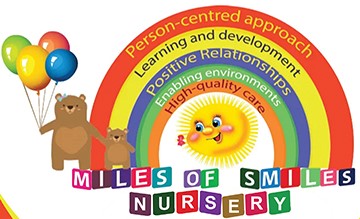

Child-centred approach
A child-centred approach in early years education involves putting the child at the centre of their learning. This style of learning is unstructured and encourages a child’s natural curiosity. It looks at the child’s holistic development, enabling the child to make decisions and solve problems, and contributes to self-esteem so the child can feel comfortable with who they are. In practice, this means staff should facilitate learning instead of showing a child what to do.
Learning and development
There is crucial period from birth to age five when children undergo rapid cognitive, emotional, and physical growth. Children develop essential skills such as language, motor abilities, and social interaction during this time. The Early Years Foundation Stage Framework (EYFS) outlines seven areas of learning and development. Throughout the early years, practitioners must help children work towards the early learning goals by supporting their learning and development in the 7 different areas.
Miles of Smiles Nursery follows the Curiosity Approach to child development, which has at its heart the respect and love for every child and their innate need to develop. We believe that children are born to learn and can be independent of an early age given the right opportunities and choices. We give children a choice but also give clear limits to work within which broadly incorporate respect for themselves, others and the environment.
Positive Relationships
We believe that a child’s early journey is affected by everything around them including the significant people in their lives and only when home and nursery life follow the same path, children can flourish. We, therefore, work in partnership with our parents to ensure a consistent approach with all our children.
Enabling Environment
We support your children’s development and learning through physical, social, and emotional surroundings. Our setting encourages children to be active explorers rather than passive recipients of knowledge, fostering independence and holistic development. Key aspects include providing a rich, varied, and safe space for play and exploration, appropriate challenges, and sensory stimulation to nurture all-around growth.
High-quality care
We know that a child’s earliest years are the most formative. It’s the time their brains are growing and developing billions of new connections. There’s a range of available research that tell us that high-quality provision is critical for good outcomes for children. We use evaluation tools to measure quality, we evaluate the impact of what we have observed/measured to identify the impact on positive outcomes for your children.
We add elements of our own pedagogy to create a stimulating and playful environment, both indoors and outside, where children feel safe and comfortable to:
- try out ideas
- investigate
- solve problems
- take risks
- have fun
- develop interests in the world
Our setting is inclusive with children’s individual needs at the heart of everything our setting does. With children and families under our care, we share and celebrate similarities and differences within our setting, local communities and wider society in which they live.

 Miles of Smiles Nursery